Beginner-Friendly Braggot: Balancing Malt and Wildflower Honey
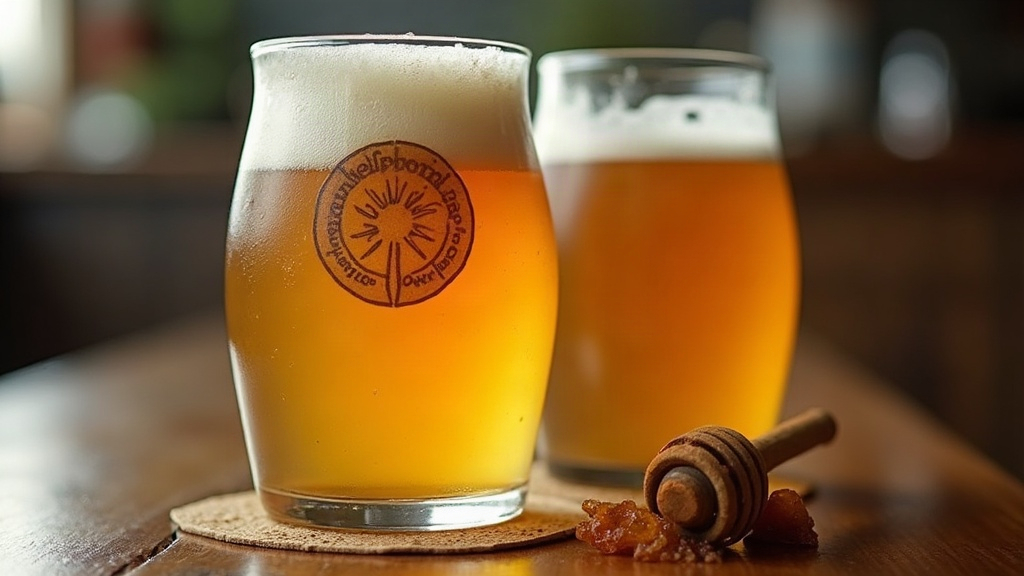
Braggot sits right at that sweet spot between beer and mead: malted grain meets honey, and the result is richer than a standard ale but nowhere near as boozy-sweet as a straight mead. If you’re just getting into this style, there’s one skill that matters more than anything else: balancing malt bitterness against the floral sweetness of wildflower honey. Nail that ratio and you get something smooth and sessionable. Miss it, and you end up with either a cloying mess or something too bitter to enjoy.
What Exactly Is a Braggot?
A braggot is a fermented drink made from malt extract (or all-grain wort) plus honey, usually fermented with ale or mead yeast. It goes back to medieval Britain, and today’s versions run the gamut, from hop-forward “honey IPAs” to quiet, barely-hopped honey ales where the malt and honey just do their own thing.
For a first attempt, don’t chase complexity. Chase balance. You want that toasty, biscuity malt backbone to hold up the honey’s floral notes, not fight with them.
Why Wildflower Honey Works Well for Beginners
Wildflower honey is a smart place to start, for a few reasons:
- It’s everywhere. You’ll find it at any grocery store or farmers market, unlike single-varietal honeys (orange blossom, tupelo) that cost more and take effort to track down.
- Its flavor sits in the middle. Not as loud as buckwheat honey, not as flat as clover honey. That middle ground gives you some wiggle room if your ratios aren’t perfect.
- It ferments clean, adding light floral and fruity notes without dragging in harsh tannins or weird funky aromas.
For a 5-gallon batch, 2 to 4 pounds of wildflower honey is a solid beginner range. Enough to taste it, not so much it takes over.
Balancing Malt Bitterness: The Core Challenge
New brewers tend to make one of two mistakes: over-hopping (which fights with honey’s delicacy), or picking honey that’s too dark and assertive (which just buries the malt). Here’s how to dodge both.
1. Keep Hop Additions Low and Simple
- Stick to one low-alpha bittering hop, something like Cascade or East Kent Goldings, and keep it at 10-15 IBUs total. That’s just enough to keep the beer from tasting flat and flabby.
- Skip late additions or dry hopping this first time around. Floral hop aromas and honey aromatics can clash in ways that are hard to predict until you’ve got some experience under your belt.
2. Choose a Malt Bill That Supports, Not Competes
- Base malt: 6-8 lbs of pale malt or light malt extract.
- Toss in 0.5-1 lb of Munich malt for a hint of toastiness.
- A small addition, 4-6 oz, of crystal/caramel malt (20-40L) gives body and a light caramel edge that plays well with honey. Don’t push past that amount, though, or you’ll stack sweetness on top of sweetness and lose the balance entirely.
3. Add Honey Post-Boil, Not During
This one matters a lot. Boiling honey burns off the delicate aromatics that make it worth using in the first place, and can introduce off-flavors you really don’t want. Instead:
- Run your boil as normal with the malt and hops.
- Kill the heat, let the wort cool to around 170°F (77°C), then stir in the honey. That temperature pasteurizes it without scorching it.
- Or, skip that step entirely and add the honey straight into the fermenter with your cooled wort. You’ll keep more of the aroma that way.
Yeast Selection for a Smooth Fermentation
Go with a clean ale yeast like Safale US-05 or Wyeast 1056 (American Ale). These won’t throw esters that compete with honey’s natural fruit notes. Leave the aggressive Belgian strains for later, once you’ve got a batch or two under your belt and want to play with more complicated flavors.
Ferment at a steady 65-68°F (18-20°C) for 2-3 weeks. Then let it sit and condition for at least 4 weeks before you even think about tasting it. Honey drinks need more time than a typical ale to settle down and come together, so resist the urge to rush this part.
Common Beginner Mistakes to Avoid
- Dumping in too much honey at once. You’ll end up with something sweet and one-note, with the malt barely noticeable.
- Reaching for aggressive hop varieties like Citra or Simcoe. They step all over honey’s subtlety.
- Rushing conditioning. A braggot genuinely tastes better after a full month of waiting. Skip that and you’ll know it.
- Skipping gravity readings. Honey ferments out more fully than malt sugars do, so the finish will be drier than you’d expect from a regular beer. Track your OG and FG so you actually know what happened in the fermenter, not just what you’re guessing happened.
A Simple Starting Ratio
For a 5-gallon batch:
- 7 lbs pale malt extract
- 0.75 lb Munich malt (steeped as specialty grain)
- 5 oz crystal 40L
- 3 lbs wildflower honey (added post-boil)
- 1 oz East Kent Goldings (60-min boil)
- US-05 ale yeast
This gets you a balanced, easy-drinking braggot around 7-8% ABV, with gentle bitterness, a touch of caramel, and honey character that’s clearly there but not shouting.
Conclusion
Brewing a beginner-friendly braggot really comes down to restraint: light hopping, a malt bill that supports rather than competes, and honey added carefully so its aroma survives the process. Wildflower honey’s middle-of-the-road character makes it the perfect training wheel here, forgiving enough to mess around with, distinctive enough that you’ll actually taste it in the glass. Stick to the ratios above, give it the time it needs to condition, and you’ll land on something genuinely good, a drink that pulls the best parts from both beer and mead into one glass.