Converting a Liquid Starter to Stiff Lievito Madre for Panettone
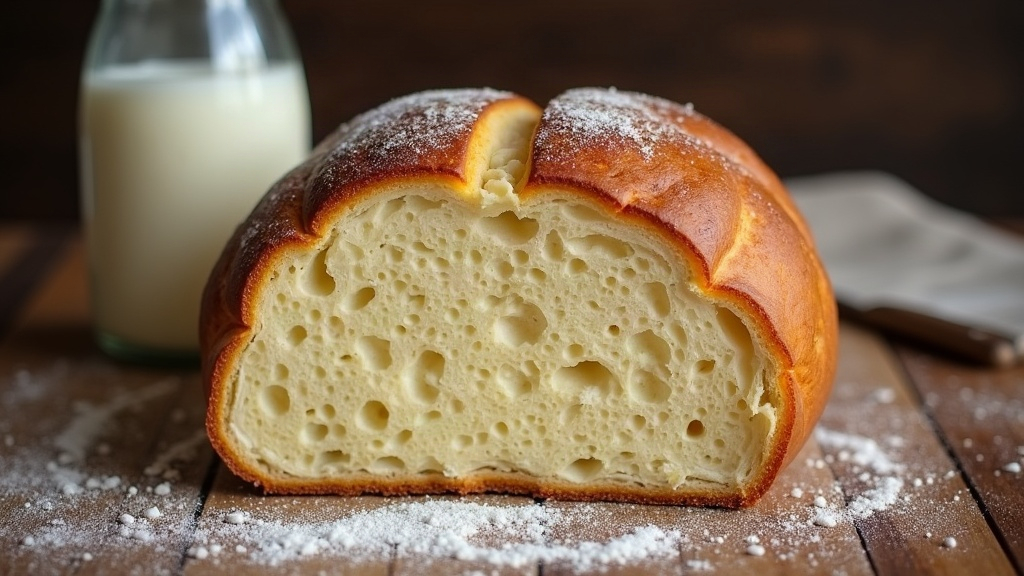
If you’ve been feeding a liquid sourdough starter and you’re itching to make panettone this year, there’s a catch nobody mentions on day one: your starter needs to change shape, literally. You’ll need to convert it into a stiff lievito madre, a firm, low-hydration culture (around 50% hydration) that Italian bakers have relied on for generations to get that tall, feathery, pull-apart crumb panettone is known for. This isn’t a quick fix. Plan on 7 to 10 days of daily feedings, and your loose, soupy liquid starter will gradually turn into a powerful, sugar-tolerant stiff culture ready for enriched holiday baking.
Why Convert at All?
A standard 100% hydration liquid starter is built for rustic loaves. It’s sour, loose, fast-fermenting, basically the opposite of what panettone dough wants. Panettone is enriched to the extreme, packed with butter, eggs, sugar, and extra egg yolks. All that sugar and fat slows fermentation down and can straight-up overwhelm a wild yeast culture that hasn’t been trained for it.
Lievito madre fixes this for a few concrete reasons:
- Lower hydration (45-50%) builds a tighter gluten network, which traps CO2 more effectively and produces a milder, less acidic flavor than you’d get from a wet starter.
- Frequent, disciplined feedings shift the yeast-to-bacteria balance toward something that can handle sugar and fat without stalling out mid-ferment.
- Mild acidity keeps the crumb soft and sweet instead of tangy, which is really the hallmark of a properly conditioned lievito madre.
Step-by-Step Conversion Process
Step 1: Stiffen the Dough Gradually
Don’t rush straight to 50% hydration on day one, your culture will protest. Instead, taper it down over 2-3 feedings:
- Day 1: Mix starter with flour at 70% hydration.
- Day 2: Drop to 60% hydration.
- Day 3 onward: Settle at 45-50% hydration (for every 100g flour, use 45-50g water).
This slow taper keeps you from shocking the culture and gives the microbial population time to rebalance itself.
Step 2: Switch to a Binding Technique
Once you’re hovering around 50% hydration, bring in the bound lievito madre method: knead the stiff dough into a tight ball, wrap it firmly in cloth or cheesecloth, and tie it off with kitchen twine. Then submerge the whole bundle in water kept at roughly 28°C (82°F).
- When it floats to the surface, usually somewhere between 2 and 4 hours, it’s roughly doubled in size and ready to use or refeed.
- This is the old-school Italian method, and it genuinely produces a stronger, more elastic starter than open-air feeding alone.
Step 3: Feed Daily, Twice if Possible
During that first week of conversion, feed once or ideally twice a day at a 1:1:0.5 ratio (starter : flour : water, by weight). Reach for a strong bread flour, W300-350 if you’re working with Italian milling classifications, or just a high-protein bread flour from your local mill.
- Discard everything except 20-30g of starter at each feeding.
- Hold the culture at 26-28°C (79-82°F) for steady, predictable activity.
- Once fully converted, expect it to double in about 3-4 hours.
Step 4: Test for Panettone Readiness
Before you trust it with real panettone dough, put it through a float test and a rise test:
- Drop a small piece into room-temperature water. It should float within a few minutes, not sink and sulk at the bottom.
- Mix up a small enriched test dough (flour, sugar, butter, eggs) and watch whether it rises reliably within 6-8 hours.
If it passes both tests consistently for 2-3 days running, you’ve got a panettone-ready starter on your hands.
Common Problems and Fixes
- Starter won’t stiffen properly: your flour is probably too weak. Swap in something with at least 12-13% protein.
- Sour or acidic smell persists: feed more often and shorten the time between feeds. Lingering acidity almost always means the culture is going too long between meals.
- Slow rise in enriched dough: it needs more conditioning. Add small amounts of sugar and butter gradually over several feeds to build up tolerance, don’t dump it all in at once.
- Starter never floats: double-check your hydration, it may still be too wet, or the dough simply wasn’t kneaded tight enough to trap gas.
Maintaining Your Lievito Madre Long-Term
Once it’s converted, lievito madre is needier than a liquid starter, no way around that.
- Feed every 24 hours at room temperature, or every 4-5 days if refrigerated (though a lot of Italian bakers skip the fridge entirely for panettone-grade starters, preferring constant room-temp care).
- Before a big bake, run it through the bound/float method again to squeeze out maximum strength.
- Keep notes on rise times. Consistency, not a single great rise, is what actually tells you the starter is mature and panettone-ready.
Final Thoughts
Converting a liquid sourdough starter into a stiff lievito madre takes real patience, figure on 7 to 14 days of steady feeding and close observation before it’s strong enough for panettone work. But once it’s established, that stiff culture pays you back with the signature lofty rise, silky crumb, and gentle sweetness that defines a proper Italian panettone. Think of the conversion as teaching your starter a new skill: gradual hydration drops, disciplined feeding, and honest tolerance tests. Do that consistently and you’ll get there reliably, season after season.