Spunding Valve vs Priming Sugar for Carbonating Helles
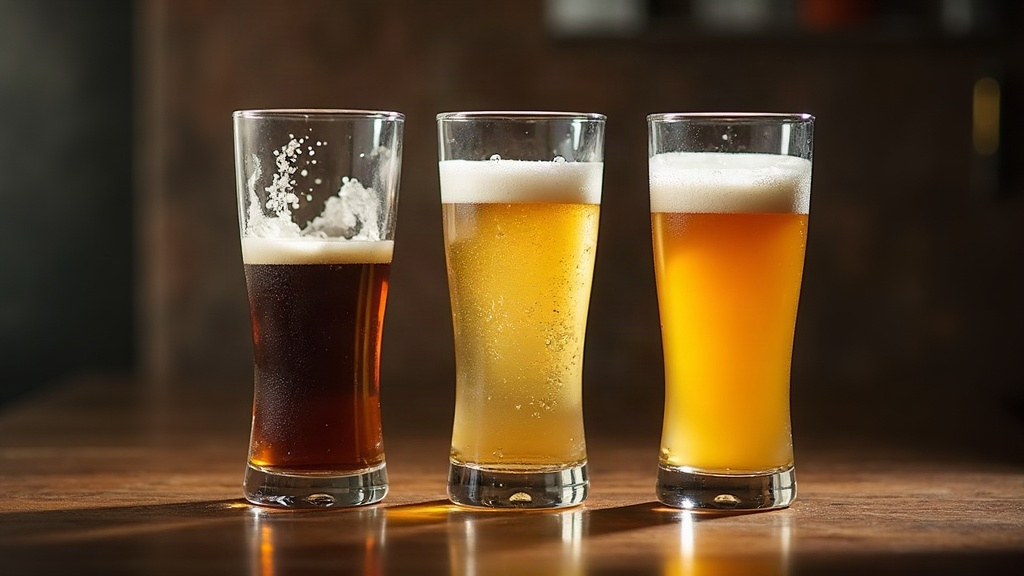
Spunding Valve vs. Priming Sugar for a German Helles: Which Wins?
If you’re brewing a German Helles and trying to decide between a spunding valve for natural carbonation or just priming your Cornelius keg with sugar, here’s the quick take: a spunding valve gives you a cleaner, more authentic result for this style. Priming sugar is simpler, though, and still works well if you’re careful about the details. Let’s dig into both methods, how each one shapes flavor, and which setup makes sense for you.
Why Carbonation Method Matters for Helles
Helles doesn’t forgive mistakes. It’s crisp, malt-forward, lightly hopped, and any flaw in carbonation shows up right away because there’s nothing else going on to mask it. No roasty malt, no hop punch, nothing to hide behind. The method you pick affects:
- Mouthfeel - fine, persistent bubbles versus a coarser, gassier CO2 bite
- Flavor purity - natural carbonation during active fermentation scrubs sulfur and acetaldehyde far better than carbonating after the fact
- Consistency - forced carbonation (post-spunding, using a CO2 tank) gives you precise, repeatable numbers every batch
Method 1: Spunding Valve Natural Carbonation
A spunding valve is a pressure-relief valve you attach to your fermenter or keg. It lets fermentation CO2 build to a set pressure, then bleeds off the excess. For lagers like Helles, this is basically the traditional German method, what brewers over there call Speisung, or closed fermentation carbonation.
How It Works
- Ferment the Helles normally until it’s roughly 2-4 Plato (specific gravity points) from final gravity.
- Transfer to a sealed keg, or seal the fermenter itself, and attach the spunding valve.
- Set the valve to your target pressure. Something like 12-14 psi gets you around 2.4-2.6 volumes of CO2, depending on temperature.
- Fermentation wraps up under pressure, naturally carbonating the beer as CO2 is produced and trapped in the vessel.
Benefits
- Self-cleaning fermentation: the yeast stays active longer, which helps it reabsorb diacetyl and sulfur compounds. That’s exactly what you need for a clean Helles profile.
- No added sugar: all the carbonation comes from the beer’s own fermentation, so the flavor stays pure.
- Authentic texture: plenty of brewers notice finer, longer-lasting bubbles compared to beer that’s been force-carbed or primed.
Drawbacks
- You need to watch gravity closely. Miss the window and you’ll either over-pressurize or fall short on carbonation.
- You’ll need a spunding valve (roughly $30-60) plus a keg or a pressure-rated fermenter.
- It’s not very forgiving on timing. Seal it too early and pressure spikes; seal it too late and you won’t hit your target carbonation.
Method 2: Priming Sugar in a Cornelius Keg
Priming sugar carbonation means measuring out a dose of sugar, usually dextrose, and adding it to a fully fermented, flat beer sitting in the keg. Seal it up and let the leftover yeast carbonate it naturally over 1-3 weeks.
How It Works
- Calculate your priming sugar dose based on keg volume and the CO2 volumes you want (plenty of online calculators handle the math for you).
- Dissolve the sugar in a small amount of boiled water, let it cool, then add it to the keg.
- Rack your finished beer on top, seal the keg, and store it at fermentation temperature for 2-3 weeks.
- Burp the keg now and then to check how the pressure’s building.
Benefits
- Simple and cheap: no special gear needed beyond standard kegging equipment.
- Predictable math: priming calculators are reliable, so you know roughly what carbonation volume you’re aiming for.
- Good fallback if you don’t own a spunding valve or a pressure-capable fermenter.
Drawbacks
- It depends on yeast health at the end of fermentation, and lager yeast tends to get sluggish in the cold, which slows carbonation down.
- It won’t clean up sulfur or diacetyl nearly as well, since fermentation is basically done by the time you prime.
- Get the sugar measurement or temperature even slightly wrong and you risk over- or under-carbonating.
Which Should You Choose for a Helles?
- Go with a spunding valve if you want the most authentic German lager character, already have a pressure-fermenting vessel, and don’t mind keeping an eye on gravity readings.
- Go with priming sugar if you’re kegging from a separate fermenter with no pressure capability, want something straightforward, and don’t mind waiting 1-3 weeks for carbonation to finish.
A lot of experienced lager brewers actually do both: spund during fermentation to get most of the carbonation naturally, then finish with CO2 force-carbonation to dial in the exact volume they want.
Practical Tips
- Aim for 2.4-2.6 volumes of CO2 on a traditional Helles. That’s lower than most ales, and it’s what gives the beer that smooth, easy-drinking character.
- Keep your fermentation and conditioning temps steady. Swings in temperature cause pressure swings too, which throws off a spunding valve setup.
- If you’re priming, use a trustworthy calculator and weigh your sugar on a scale. Don’t eyeball it, a few grams off can mean the difference between flat beer and a gusher.
Conclusion
For a German Helles, a spunding valve gets you closer to the real thing: more authentic flavor and texture, since it uses natural fermentation CO2 while the yeast is still working and scrubbing out unwanted compounds. Priming sugar isn’t a bad option either. It’s cheap, reliable, and works just fine as long as you time it right and measure carefully. But if you’re chasing that crisp, clean Helles profile people rave about from Munich, it’s worth putting $40 into a spunding valve. Your palate will thank you.